Last Monday, I had a call from a friend to see if I would like to go to Frampton Marsh RSPB in Lincolnshire as some migrant waders has arrived, namely Red-necked Phalarope and Pectoral Sandpiper.
About this time of the year, the waders that migrated to the north for breeding are beginning to return on their southerly migration and with the common species, there are often rarities that loose their way and migrate down via Europe rather than the Americas. Pectoral Sandpiper is one american species that is quite regular. Red-necked Phalarope is another rarity but I have hundreds of shots of those taken in Iceland and not yet processed so that was not an attraction for me.
The Pectoral Sandpiper was of interest but I was more keen on going for another one that was showing rather well at Titchwell on the Norfolk coast so off we went. Weather cloudy and dull.
Arriving we headed into the reserve, looked closely at a small flock of Dunlin but the target bird was not there but after a while, we found it, feeding near the path. This meant taking photos from the raised path so looking down on the bird - not ideal - so care was needed to achieve decent shots.
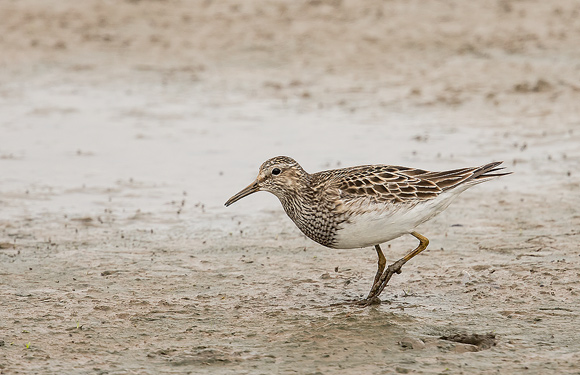

The bird helped a little by going out into the clear water for a bathe and a preen but it was still dull and cloudy.
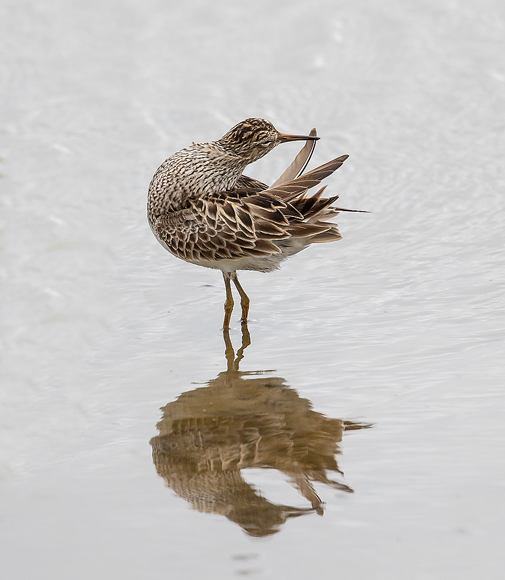
After that we went to the beach but found nothing really photographable, returned via Parrinder hide where we found a moulting Curlew Sandpiper, recently arrived.

Another try at the Pectoral Sandpiper on the way back that produced nothing extra of note and that was the end of the days photography.